
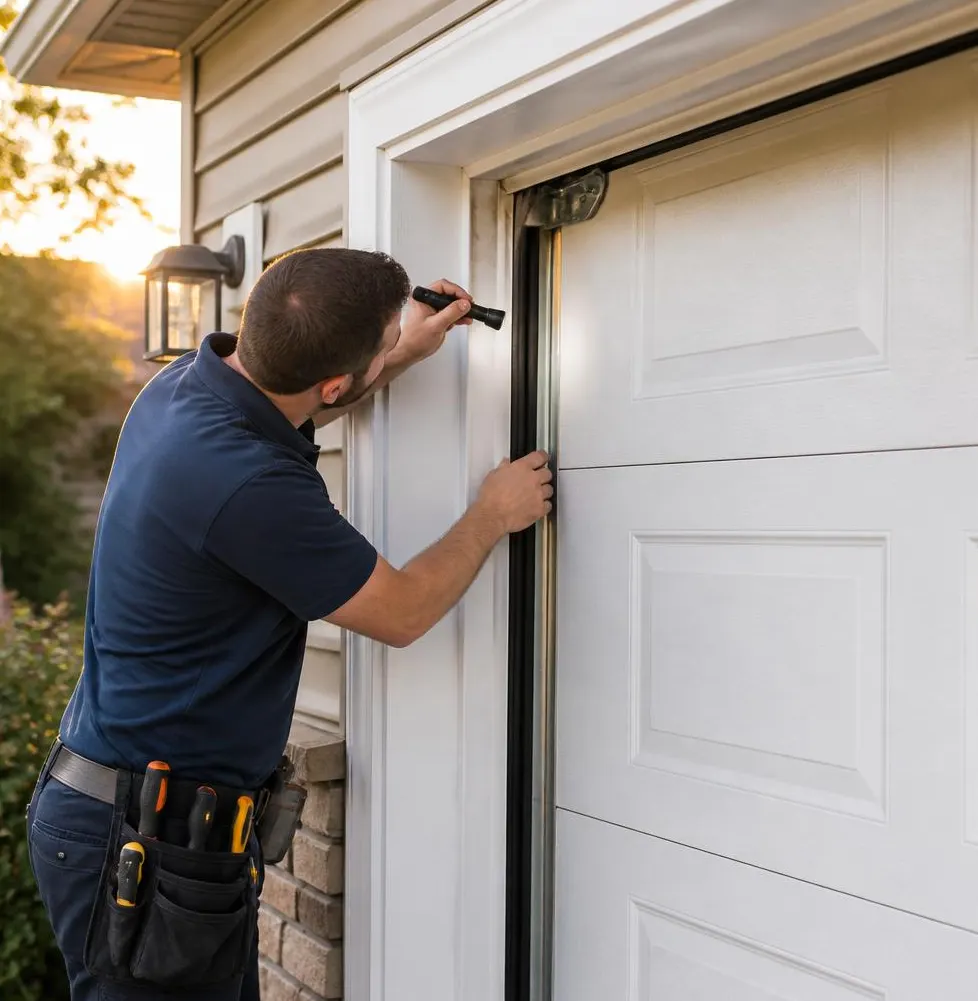
Rule of thumb: if your garage door is loud, it's almost always loose hardware or dry metal, not a failing motor. The exceptions are grinding or scraping sounds that change pitch as the door moves, a chain-drive opener that's simply reached the end of its useful life, and any noise that comes with the door jerking, hesitating, or reversing on its own — those point to spring, cable, or gear problems that go past a tune-up.
Tools You'll Need
- Socket wrench set and nut driver
- Silicone-based garage door lubricant (not WD-40 or household oil, which attract dust and grit)
- Flashlight and shop vac
- Clean rags
- A sturdy ladder
- Safety glasses
Step-by-Step: Cheap Fixes First
- Tighten everything. With the door closed and opener unplugged, go track bracket by track bracket with a socket wrench. Vibration loosens nuts and bolts over months of use, and in this area, hurricane-season wind and afternoon storm gusts shake doors even when they're closed, which speeds up the loosening. Check the opener's mounting bracket at the ceiling too — it's a common source of rattle.
- Lubricate the moving parts. Hinges, rollers, and the top of the torsion spring (not the coils themselves) all benefit from a light coat of silicone-based lubricant. Humidity here pulls moisture into metal fast, and once surface rust sets in, parts squeal and grind even if they're structurally fine. Wipe off excess so it doesn't collect dust.
- Inspect and replace worn rollers. Metal rollers are noisier by nature and corrode faster in salt-tinged, humid air. Nylon rollers run quieter and resist moisture better. Rollers are inexpensive and swap out one at a time with a socket wrench — just don't remove more than one at a time so the door stays supported in the track.
- Check chain or belt tension. A sagging chain-drive opener slaps against its rail with every cycle. Most openers have a tensioner bolt near the motor head; consult your owner's manual and adjust until the chain has slight, even tension without being drum-tight.
- Add a vibration-isolator. A rubber isolator belt between the opener's mounting bracket and the ceiling joist absorbs the hum that would otherwise travel through your framing. These cost little and install with the same bracket hardware already in place.
- Clean the tracks. Dust, pollen, and the grit that afternoon downpours wash onto a garage floor all end up in the track. Vacuum it out and wipe with a dry rag before relubricating rollers.
When Cheap Fixes Aren't Enough: The Belt-Drive Swap
If you've tightened, lubricated, and replaced rollers and the opener is still loud, the chain itself may be the problem. Chain-drive openers are mechanically noisier by design — metal link hitting metal rail, every single cycle. Swapping to a belt-drive opener replaces that chain with a reinforced rubber belt, cutting most of the mechanical noise. This isn't a bolt-on weekend project: it means removing the old opener, mounting a new rail and motor assembly, and making sure the whole system is set up for Florida's wind-load requirements if your door is rated for storm resistance. That part belongs to a technician.
What's DIY and What Isn't
Safe for most homeowners: tightening visible hardware, lubricating hinges and rollers, cleaning tracks, swapping worn rollers one at a time, and installing a vibration isolator.
Leave to a technician: anything involving the torsion or extension springs, cable adjustments, opener gear or circuit board repairs, and full belt-drive conversions. Springs are under heavy tension and cables can snap under load — both can cause serious injury, and both are common culprits behind noise that sounds like a loud pop or bang rather than a steady grind.
A Note on Local Conditions
Homes in this part of Florida deal with a specific combination that speeds up wear: constant humidity swells wood panels and tightens tolerances in the track, afternoon storms shake hardware loose, and salt-tinged air accelerates rust on exposed metal, especially rollers and hinges. After a named storm or a stretch of heavy wind-load stress, it's worth doing a quick hardware check even if the door seems fine — loose bolts are often the first sign of trouble, well before anything breaks.
When to Call Winter Park Garage Door Pro
If you've worked through the list above and the door is still noisy, or if you're hearing grinding, popping, or metal-on-metal sounds near the spring area, it's time to call in a technician rather than keep guessing. We handle Garage Door Tune-Up & Maintenance visits that cover full lubrication, hardware torque checks, and roller inspection in one trip, and we install Garage Door Opener Installation upgrades including belt-drive conversions for homeowners ready to leave chain noise behind for good.
If your garage door in Winter Park, FL is driving you (or your neighbors) up the wall, call Winter Park Garage Door Pro for a fast, honest diagnosis and a quiet fix done right.