
You're pulling into the driveway after an afternoon downpour, and the garage door that always opened smooth and quiet suddenly groans halfway up. Or maybe the opener strains like it's lifting something twice as heavy as usual. You shrug it off — the door still opens, after all. But that moment, the one where something felt slightly off, is usually the first real warning that a spring is wearing out. Springs rarely fail without notice. They give you weeks, sometimes months, of small signals first. Here's how to read them.
Run This Checklist in Your Own Garage
1. Look at the coils themselves
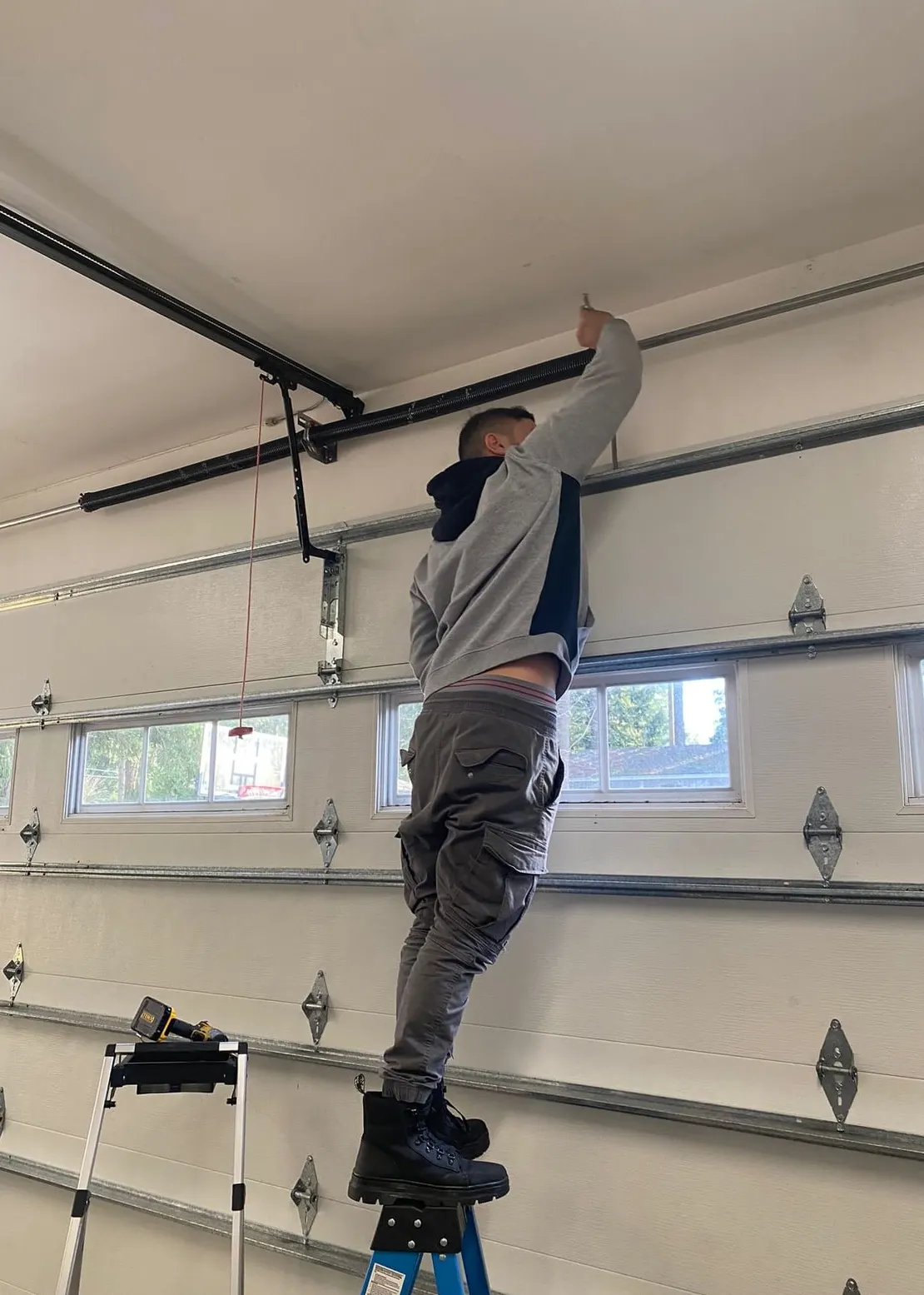
Torsion springs sit on a metal bar above the door. Walk in, look up, and check the spacing between coils. Evenly spaced, tight coils are healthy. Gaps wider than a dime between coils, or coils that look stretched out of shape, mean the metal has started to lose tension. If you see flaking, orange rust, or pitting on the surface — common here after a humid summer and hurricane season — the metal is weakening faster than it would in a dry climate, even if the spring still looks intact.
2. Do the manual balance test
Disconnect the opener by pulling the red release cord, then lift the door by hand to about waist height and let go. A door with healthy springs should stay roughly in place. If it drops on its own, the springs have lost significant lifting power. If it shoots upward, tension is uneven or overcompensating on one side. Either result means the springs are no longer doing their job correctly, even if the opener is still forcing the door open every day.
3. Listen to the opener motor
When springs are healthy, the opener barely works — it's mostly just guiding the door, not lifting it. If you notice the motor humming louder, slowing down mid-cycle, or taking an extra second or two to get the door moving, the springs have stopped carrying their share of the weight. The opener is compensating, which burns it out faster and masks how close the springs actually are to failing.
4. Watch for uneven movement
Stand to the side and watch the door open and close. One side lagging, jerking, or dipping lower than the other is a classic sign with extension springs, which run along the horizontal tracks and don't always wear at the same rate. One spring doing more work than its matching pair is a setup for a sudden, uneven failure — and it's harder to catch just by looking at the springs themselves, since they're often stretched out in a resting position.
5. Check the safety cables on extension spring systems
If your garage uses extension springs, there should be a cable running through the center of each spring, anchored to the track. These cables are what keep a broken spring from whipping across the garage. Inspect them for fraying, rust, or slack. A loose or damaged safety cable doesn't mean the spring is failing, but it does mean that if it does fail, there's nothing controlling the release of that stored energy.
6. Note any new popping or banging sounds
A sharp pop or bang when the door opens or closes — different from the usual rattle of an aging opener — is often metal fatigue announcing itself before a full break. Springs under tension don't fail silently; they usually complain first.
7. Pay attention to how long the door stays open
If you've ever propped the door halfway for ventilation and noticed it slowly creeping down on its own, that's a fatigue sign. Properly tensioned springs hold a door in place at any height. A slow drift downward means the springs are no longer matched to the door's weight.
Why This Matters More in Winter Park's Climate
Afternoon storms, humidity swings, and salt-tinged air near the coast all accelerate rust and metal fatigue on springs compared to drier climates. A spring that might last years elsewhere can wear out faster here, especially on doors that get used heavily during storm season when garages double as shelter for bikes, grills, and patio furniture.
When to Call Winter Park Garage Door Pro
If two or more items on this checklist don't pass — visible gaps or rust on the coils, a door that won't hold its balance, or an opener working harder than it should — it's time to call before the spring fails on its own schedule, usually at the least convenient moment. Our technicians handle both Garage Door Spring Repair and full Garage Door Tune-Up & Maintenance visits, where we check spring tension, cable condition, and coil wear as part of one inspection, so you're not guessing room by room.
If your garage door in Winter Park, FL is showing any of these signs, call Winter Park Garage Door Pro today and we'll get it checked before it becomes an emergency.